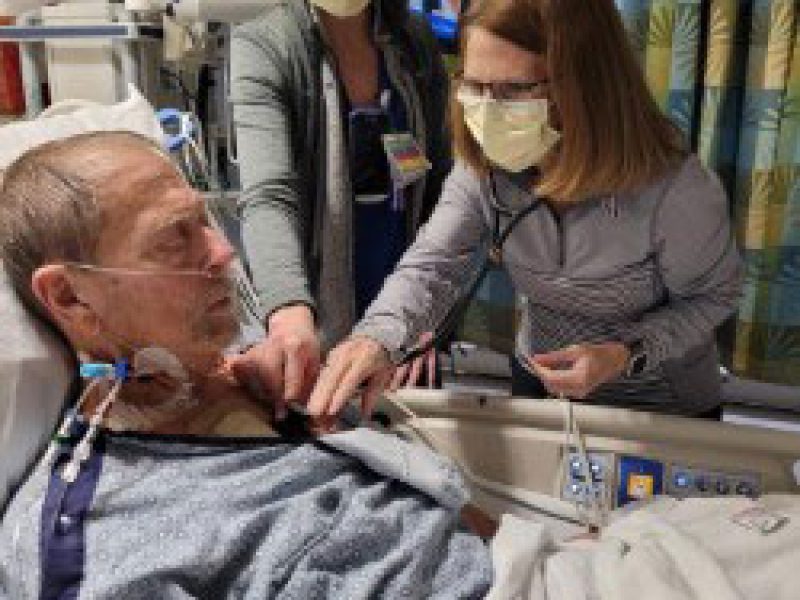
On December 20, 2022, 69-year-old Bob Curlee received the gift of a lifetime—a new heart. But the road to that lifesaving moment wasn’t easy.
“I had hypertrophic cardiomyopathy for a very long time,” says Bob. “I actually had heart problems as a kid, but no one knew what it was back then. As an adult, I developed atrial fibrillation (a rapid and irregular heartbeat) and we tried managing it with medication for years, but it kept coming back. Eventually, I needed a pacemaker. I got my first one in 1997, a second about 10 years later, and a third nearly another decade after that. I became completely dependent on the pacemaker. Eventually, my cardiologist told me I was in heart failure and there was nothing they could do to reverse it.”
In the years leading up to his transplant, Bob’s condition steadily declined. He had difficulty breathing and could barely manage to walk a single block.
“The last year and a half it got really bad and very hard,” recalls Bob. “I’d come home and just crash in the chair and have a hard time breathing. I was really weak. There were days when I could barely move at all.”
Bob was eventually placed on the transplant list. After a checkup on December 9, 2022, his doctor told him he couldn’t go home—he needed to be admitted to the hospital immediately to wait for a donor heart.
For Bob, those first nights in the hospital were the hardest. “I kept thinking, is this going to really happen? Because if it doesn’t, then I’m doomed. I’m not going to live much longer.”
Once hospitalized, his transplant status was upgraded, and ten days later, a heart became available. There had already been one dry run, so his wife, Audrey, tried to temper her excitement, unsure whether this heart would be viable. But it was.
“When we got the call we were very excited, but worried, too,” says Audrey. “The morning of the transplant, the doctor came in to prep him and we were all excited and getting ready, but I had to go sit in the bathroom because I got sick just thinking about what they were going to do. I felt like I was going to faint. I kept trying to talk myself out of it, because I needed to be in there with him. It was very emotional.”
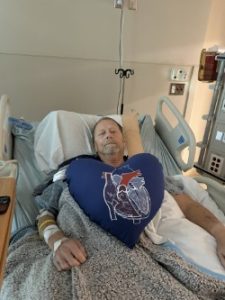
The surgery was long, but successful. Afterward, Bob spent 10 days recovering in the hospital, supported every step of the way by an “amazing staff” at Duke University Hospital.
“I’ve never met such dedicated, caring people. They really care about what they’re doing. Every single person was just so caring and very attentive, 24 hours a day.”
From there, recovery meant learning to live again. Audrey acted as his primary caregiver, managing medications, bandages, showers, and emotional support. Cardiac rehab helped rebuild his strength. But it was his faith and his desire to honor his donor that carried Bob through.
“I had to turn to my faith, because I did feel a lot of guilt about someone passing away,” says Bob. “People had to convince me that it’s what they wanted—they wouldn’t have decided to be a donor if they had not wished for this to happen.”
Bob and Audrey eventually wrote to the donor’s family, expressing deep gratitude for the gift that saved Bob’s life.
“I expressed a great appreciation for the wonderful gift that their loved one provided me,” says Bob. “I’m assuming there were other organs involved, and there’s no telling how many people were helped from their passing. I told them I wanted to do something good with my life, to not waste this gift, and that I was looking forward to spending quality time with my wife and grandkids.”
Before the transplant, Bob had little energy for anything, and family gatherings often happened without him.
“It was to the point where family functions did not include him at all,” says Audrey. “The kids would ask where grandpa was, and if he was feeling better. They were too young to understand the whole process.”
Today, Bob is an active “Grandbob” to six grandchildren and fully present in their lives. He also had the opportunity to enjoy road trips with his little sister, Kathy, who was battling terminal cancer.
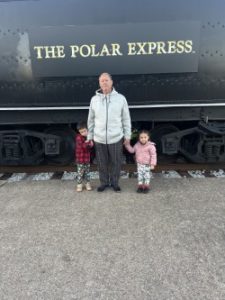
“My sister’s bucket list was to go on trips with us so that we could be all together,” says Bob. “We’ve been out west to Yellowstone and the Tetons. We’ve been to Canada on another trip. We spent some very good times with my sister and her husband.”
Bob says that one of the best gifts is knowing he’s living on time that he “shouldn’t have had.”
“You get a lot of time to think and contemplate what life should be,” says Bob. “So, I’ve done a lot of that. Every day, I think about how lucky and grateful I am. I know I need to appreciate life and make the most of the time I’ve been given. I’m a whole new man now. It’s eye opening to know that I’m living on time that I shouldn’t have had. I should have been gone by now.”
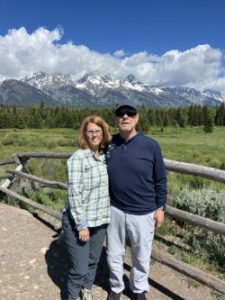
Bob and Audrey hope that by sharing their journey, they can educate others and encourage someone to say “yes” to organ donation.
“Everyone should at least give donation some thought,” says Bob. “Once you pass on, the body that you’re leaving behind can only benefit someone else if it’s donated. It’s not just hearts and lungs; there’s bone, tissue, eyes…little things that can turn somebody’s life around. There are so many benefits and so many lives that can be changed just by a simple donation. You might be helping someone get a full life.”
75 or more lives can be saved and healed by one organ, eye, and tissue donor. Sign up today!