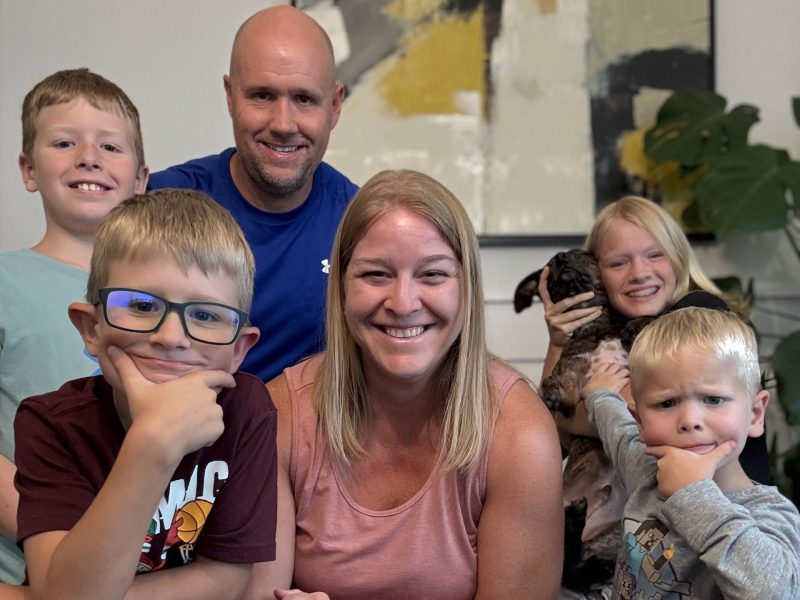
Before my transplant, I was a busy wife, a military spouse, and a mom of four who was doing her best to keep life moving forward. From the outside, our life looked full—school drop-offs, sports, homework, church, deployments, and the everyday chaos that comes with raising kids. But quietly, in the background, Polycystic Kidney Disease was changing everything.
I was diagnosed over a decade ago. It’s a genetic disease that slowly causes the kidneys to fill with cysts and lose function over time. There is no cure. For a long while, I felt mostly normal. I exercised, stayed active, and tried to take care of myself. But little by little, my energy declined. My lab numbers worsened. Routine appointments became heavier. Words like “kidney failure” and “transplant” stopped being distant possibilities and became my reality.
As my kidneys continued to decline, our whole family felt it. Fatigue became part of my daily life. I couldn’t always show up the way I wanted to for my kids. My husband carried more weight at home while also serving in the military. My children knew Mom wasn’t “sick” in a way you could see—but they knew something wasn’t right. There was an undercurrent of uncertainty in our home. We talked about transplant in simple, honest ways.
The waiting was one of the hardest parts. Once I was listed for transplant, we entered a strange in-between season. You live normally, but not really. Every unknown number calling your phone makes your heart jump. Every hospital bag sits half-packed. You try not to think about statistics. You try not to imagine worst-case scenarios. You try to stay hopeful without getting your heart set on anything. It’s a mental tug-of-war between fear and faith.
Then the call came.
Just four months after being on the transplant list, on a Monday evening, I received the call that a kidney was available. I remember the shock more than anything. It felt too fast. Too surreal. We went to the hospital that night so the team could make sure I was healthy enough for surgery. There’s a strange calm that settles in during moments like that. You know your life is about to change, but you can’t fully process it.
The next morning, I received my kidney transplant. The kidney came from a deceased donor. I won’t know anything about that person for a year, giving their family time to grieve their unimaginable loss. While my family was celebrating hope, another family was mourning. That reality has never left me. I pray for them often. Their loved one gave me a second chance at life.
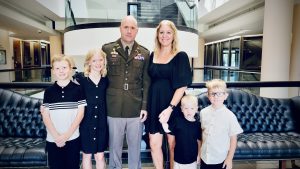
Writing to my donor’s family was one of the most emotional things I have ever done. How do you thank someone whose worst day became your miracle? There are no perfect words for that. I knew I could never fully express what their loved one gave me, but I needed them to know that their gift mattered deeply—to me, to my husband, and to our children.
I don’t know my donor’s name. I don’t know their age, their hobbies, or what made them laugh. I only know that they were a perfect match for me. My surgeon told me that kind of match only happens a small percentage of the time. To me, that doesn’t feel random. It feels intentional. It feels like someone I will forever call my hero.
In my letter, I shared who I am, I told them about my husband. I told them about my kids. I told them about our pets and how we love being outdoors, watching our kids play sports, and just being together. I wanted them to see the life their loved one saved. I wanted them to picture the birthdays, the graduations, the quiet mornings, the ordinary family dinners that now get to continue because of their generosity.
Before transplant, I was tired all the time. Since my surgery, I feel like a new person. I wake up early with energy I haven’t felt in years. I feel present. Clear. Joyful. My son said something shortly after I came home that I will never forget. He said, “It feels different when you are here.” When I asked what he meant, he said, “It feels better.” That is what my donor gave my family. Not just more time, but better time.
I have not yet heard from the donor family, and I understand that they are still grieving. I respect that deeply. If they never reach out, I will still carry endless gratitude for them. If they ever choose to connect, I would welcome that with an open heart.
If I could meet my donor in person, I would simply say thank you. I would tell them that their life mattered. That their final act of generosity changed the course of mine. I would tell them about the early mornings, about watching my kids play, about celebrating life milestones. I would tell them that their kidney is strong and thriving. I would promise them that I am taking care of it and honoring their gift every single day.
I think about my donor daily. I wonder what they loved, what music they listened to, whether they preferred the beach or the mountains. I carry them with me in a quiet, steady way. Their loss will never be minimized in my story. Two truths exist at the same time: my family celebrates while theirs grieves.
Their loved one will always be my hero. And I will spend the rest of my life living in a way that honors that gift.
My biggest accomplishment after transplant is simple but profound: I got my life back. My everyday life now feels steady instead of fragile. I don’t have to ration myself the way I used to. I can be fully present with my kids instead of mentally calculating when I’ll need to sit down. I can exercise without feeling like I’m fighting my body. I can plan a full day and actually live it.
Since transplant, our oldest child turned 13. Becoming parents to a teenager is a milestone I wasn’t sure I’d feel this strong for. My husband and I also celebrated 20 years of marriage. Those moments hit differently now. They aren’t just anniversaries or birthdays—they’re reminders that I’m here for them in a way I wasn’t sure I would be.
One of the most meaningful changes is the ability to plan long-term without fear sitting in the driver’s seat. We’re planning a big family trip to celebrate this second chance at life. Not just a vacation—but a marker. A celebration of survival. A reminder that we are moving forward.
Before transplant, my world felt smaller. My body dictated the boundaries. Now, the horizon feels wide again.
Transplant didn’t just improve my lab numbers. It restored my ability to participate fully in my own life. And that has been the greatest accomplishment of all.
75 or more lives can be saved and healed by one organ, eye, and tissue donor. Sign up today!