When people picture someone waiting for a transplant, they often imagine either an older adult in failing health or an infant with a congenital condition. But transplantation doesn’t just save the lives of the old and young. Often it saves the lives of people in the middle of building a career and planning for the future. At just 31 years old, Nicole received a lifesaving liver transplant on March 28, 2025.
Nicole’s health challenges began as a very young adult. After contracting mononucleosis (mono), she was diagnosed with Postural Orthostatic Tachycardia Syndrome (POTS). Doctors believe the virus may have triggered a dysautonomia response in her body, though the exact cause remains unclear.
In her very early 20s, she learned she had genetically high cholesterol (most notably triglycerides). At the time, however, she didn’t fully understand the potential long-term consequences.
“If I had known then that my cholesterol was already an indicator that something was wrong with my liver, I would have been more cognizant about what I was putting into my body,” said Nicole. “I graduated college at 22, but during those college years, I was definitely drinking. The combination of high cholesterol and alcohol sped things up a lot.”
A few years later, after her first COVID contraction, and another viral response in her body, doctors discovered severe deficiencies in vitamins B1 and B2, which led to significant neuropathy and muscle breakdown. The damage was so severe that Nicole had to relearn how to walk four times. In November of 2024, Nicole developed her most severe case of rhabdomyolysis, commonly known as rhabdo, a serious condition in which damaged muscle tissue breaks down rapidly. Because rhabdo is known to cause kidney failure, doctors closely monitored Nicole’s kidney function.
“By watching the kidneys closely, they noticed my liver numbers were high,” she said. “Eventually, I received the diagnosis of cirrhosis of the liver at that time. By February of 2025, things were really bad.”
While undergoing inpatient physical therapy and learning to walk again after rhabdomyolysis, Nicole developed jaundice and experienced a lot of fluid build up.
“I was struggling to breathe because I had so much fluid in and around my lungs,” she recalled. “I was just so exhausted and clearly deteriorating fast.”
On March 17, 2025, Nicole was scheduled for a routine appointment to have lab work done. On that day, she was too weak to move on her own and was taken to the emergency room instead. As her condition worsened, doctors conducted a transplant evaluation. She was ultimately denied, a decision that devastated Nicole and her family.

“It was very traumatic for my family,” she said. “We asked them for a referral to Duke.”
Within about 36 hours of arriving at Duke, Nicole was intubated, put on dialysis, and received blood pressure support. Given the urgency of her condition, Duke’s transplant team convened an ad hoc meeting to determine whether she would be listed for a liver transplant. She was accepted and listed at around 4 p.m. By 6 p.m., she had an offer.
“The surgery actually went very smoothly,” said Nicole. “Recovery wise, I stayed in the hospital for another two weeks before I started moving around on my own and was able to go home.”
Nicole says she began thinking about her donor almost immediately after transplant.
“I was curious about who this person was,” she said. “I had a lot of gratitude and just wanted to know more about them. I think about how everything worked out, how something aligned in the universe, and I feel a sense of connectedness.”
Wanting to honor that connection, Nicole wrote a letter to her donor’s family, introducing herself and expressing her gratitude.
“It was not easy to articulate,” Nicole admitted. “I tried my best to relate to them, as I’ve experienced a lot of loss in my life, too. There’s really no words to say thank you for the gift I received.”
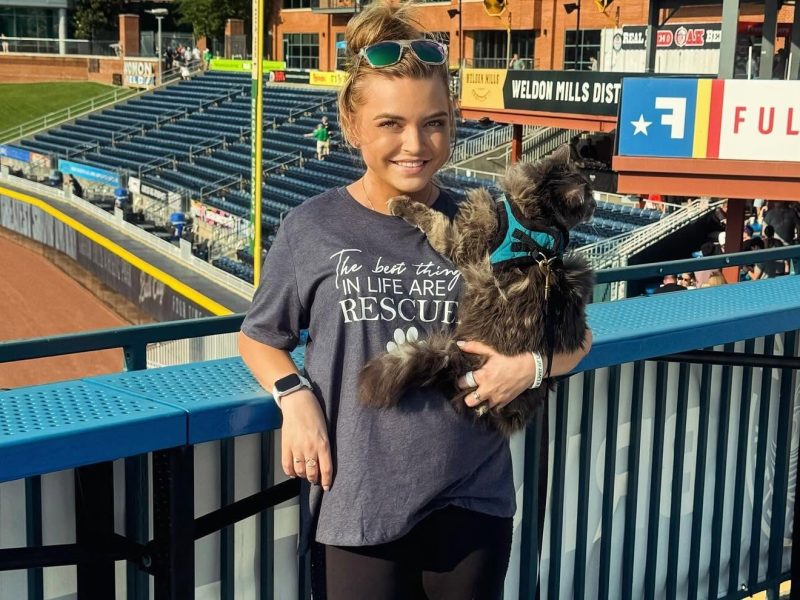
In the letter, she shared details about her life and the opportunities her transplant has given her. She wrote about her passion for fostering kittens, something she was finally able to return to after recovering.
“I told them I’ve become a huge liver advocate now and closed it with my gratitude,” said Nicole. “I will honor them every day with all the little lives I get to save through fostering.”
Since her transplant, Nicole has experienced a dramatic transformation, both physically and emotionally.
“It still took several months to fully get my walking back,” said Nicole. “I still have some lingering issues, but it’s nothing compared to before the transplant. My cholesterol is normal now. It just goes to show how much this organ plays into so much of our daily physical functioning. Overall, it’s incredible.”
Beyond restoring her health, the transplant gave Nicole a new perspective on life and the relationships she holds dear.
“Life is much more fragile than I realized,” she said. “I’ve lost several people in my life and understood that before, but to a different extent now. Having been brought back at the last minute was a huge eye-opener, especially being 31. I came so close to losing everything.”
Watching her family endure the uncertainty of her illness also left a lasting impact.
“Seeing my family go through that changed me,” she said. “I think the love we all have for each other is deeper now. There’s a different understanding.”
Now that transplant is behind her, Nicole looks forward to travelling and rediscovering a sense of independence. In the meantime, she continues to advocate for liver health and organ, eye, and tissue donation.
“It’s not just about lifesaving organs,” she said. “There’s eye donation, tissue donation—so many things we can donate. It gives such a light at the end of someone’s tunnel. It’s a way to live on through other people. As recipients, we are so grateful for the gift, and many of us wholeheartedly honor and give love to this organ. Regardless of how we got here, we do not take this gift for granted.”
75 or more lives can be saved and healed by one organ, eye, and tissue donor. Sign up today!