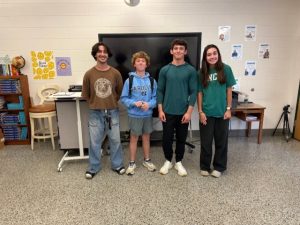
At just 17 years old, Aiden is a healthy young man who has never needed an organ or tissue transplant, but that hasn’t stopped him from becoming an advocate for donation.
The son of HonorBridge COO Kim Koontz and an aspiring nurse, Aiden took it upon himself to launch a Student Organ Donation Advocates (SODA) chapter at his high school, making it only the second public high school in North Carolina to do so.
“Kids don’t understand that one registration can save a life,” Aiden says. “The smallest act can really go a long way. People hear about organ donation, but they don’t always realize how much of a difference it truly makes.”
Starting the chapter wasn’t easy. Aiden faced pushback early on, but his persistence paid off. Along the way, he inspired classmates to join the cause and learn more about the power of organ, eye, and tissue donation.
In this Q&A, Aiden shares his journey and explains why donation is a cause worth fighting for.
What first inspired you to start a SODA chapter at your school?
My mom definitely influenced my interest in organ donation, but I’ve always been drawn to the medical field and plan to become a nurse. I knew I wanted to raise awareness about something meaningful, and my mom told me about SODA. Growing up around her work with HonorBridge, I’ve seen firsthand how organ donation transforms lives. Hearing those stories has always hit close to home, so starting a SODA chapter felt like a no brainer.
How did your peers and school react when you introduced the idea?
At first, I had to find a small group of friends who really believed in the cause and wanted to help. Once we had that, we reached out to SODA National and told them we were interested in starting a chapter. Then I had to work with my principal and assistant principal to get approval.
The hardest part was navigating the new Parent Bill of Rights law, which limits what we can share with students. For any topic that could be considered sensitive, like organ donation, parents have to be notified in advance. So I spent about two or three months going back and forth with administrators to make sure we could move forward. I think they were nervous because organ donation can feel like a polarizing topic.
Eventually, with help from SODA, I convinced them that our goal wasn’t to get students to sign up as donors, but simply to raise awareness. Once we were approved, we became only the second public high school in North Carolina to have a SODA chapter, which is pretty cool. Now we have around 25 or 26 members. We just held our club fair, and it was great to see more students sign up.
How do you introduce your club to students?
A lot of students see “Student Organ Donation Advocates” and immediately ask, “Do I have to sign up to be an organ donor to join?” The first thing I tell them is absolutely not. We’re just spreading awareness.
When I talk to students, I put myself on the same playing field. I don’t want to sound like I’m talking down to anyone. I just say, “Sign up, learn more, and if you decide it’s not for you, that’s totally fine.” It’s about getting people interested enough to come to that first meeting. Once they hear what we’re about, most of them stick around.
What kinds of activities, events, or campaigns has your chapter organized so far?
Our first meeting each year is usually an information session where we explain the process of organ donation and educate everyone. They don’t know about the process of organ donation, because it’s not something that’s taught in school.
Later on, we’ll do more fun activities. For example, last year we did a Q&A with a transplant surgeon. The surgeon joined a Microsoft Teams meeting and we had students ask questions. No other club at our school has done something like that. It drew a lot of attention and helped us stand out. We realized that if we wanted people to stay engaged, we needed events that were both educational and exciting.
This year, we are also hoping to partner with our school’s new HOSA (Health Occupations Students of America) chapter. They do a 5K and host a bunch of health-related activities, so we’re planning to work together this year. We’d love to have a big booth where students can learn about both organ donation and health career paths. I think that would be really cool.
What impact have you noticed since starting your SODA chapter?
I think students gain an appreciation for organ donation by simply attending meetings. I did a presentation on the process of organ donation, and after the meeting was over, I asked my friends if they learned anything from it. They said it changed their perspective completely. Kids don’t fully appreciate the amount of work that goes into a transplant, and that the organ only lasts but so long off a pump. So, the process has got to be fast. Before I started the SODA chapter, I didn’t fully understand the process, either.
What would you say to other young people who aren’t sure if they want to sign up as donors?
I’d tell them to put themselves in the shoes of the people waiting for an organ. Just because you’re healthy doesn’t mean everyone else is. There are even kids under 18 who are waiting for a transplant. You have to empathize with them. Imagine if you needed a kidney, lung, or something you can’t live without. You’re just sitting on a waitlist, and your life depends on someone else’s decision. All someone has to do is sign up to be an organ donor to potentially save a life. Putting yourself in someone else’s shoes can really change your perspective a lot.
What advice would you give to another student thinking about starting a chapter?
Be persistent. Don’t take no for an answer. There were so many times I thought my assistant principal was going to shut me down completely. But I kept emailing, following up, and pushing for it.
If I’d given up, our chapter wouldn’t exist. SODA isn’t well known enough yet that someone else will just come along and start one. If you want it at your school, you have to make it happen. It’s such an important cause, and it’s absolutely worth fighting for.
To learn more about starting your own SODA chapter on campus, visit sodanational.org.