
Born with cystic fibrosis (CF), Kayla Sanders spent much of her life in and out of hospitals, managing treatments and complications. But the idea of a lung transplant? That terrified her.
“I had always heard terrible recovery stories, so for a long time, I told myself I’d never go through with a transplant,” Kayla admitted. “But as I got sicker—after being diagnosed with the deadliest infection you can get with CF—my social worker at the CF clinic urged me to at least talk to someone about it. So, I did.”
That decision led Kayla, a Missouri native, to UNC in the summer of 2013, where she underwent four days of rigorous testing to determine if her body could handle the transplant.
“On August 27, they called and told me I qualified,” she recalled. “They asked me to return to North Carolina on September 1, and I was officially placed on the transplant list on September 4.”
The next three months were grueling. Kayla battled multiple infections, relied on oxygen, and required a feeding tube. Then, in November, a medication she was given caused her kidneys to fail overnight. She was taken off the list for three weeks and fought hard to regain her spot. Finally, on the Sunday after Thanksgiving, she was reinstated. On December 10 at 10:23 a.m., she got the call that changed everything.
At 30 years old, Kayla received her second chance at life in the early morning hours of Dec. 11, and just in the nick of time. The day before the call, Kayla had experienced severe pain in her left lung. After calling her transplant team, she was advised to head to the ER if the pain got much worse.
“I took pain pills and went to bed,” said Kayla. “That next morning, I received the call that they had a set of lungs for me and told me to head to the hospital. Once I got there, someone walked in and said, ‘how long has your lung been collapsed?’ If I had gone into the ER the night before the call, they would have found the collapsed lung and put in a chest tube, and I would have been taken off the list and probably only had days to survive. I couldn’t believe it.”
Kayla recovered well, and after three months, she was allowed to go back home to Missouri.
“About four months after surgery, I sold my house and moved on,” she said. “At eight months post-op, I completed my first triathlon. I came in last place, but I finished! That was a huge moment for me.”
Kayla also found a new community in the Transplant Games of America, where she competes every two years, earning plenty of medals along the way.
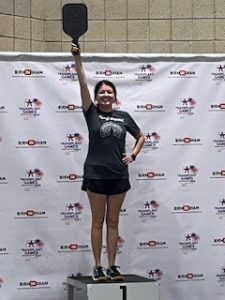
“It’s inspiring to be around people who have been through the same journey,” she said. “You meet living donors, donor families—it’s just incredible.”
Despite embracing her new life, Kayla never stopped thinking about her donor.
“I always wondered who they were,” she said. “Because I weighed just 85 pounds before my transplant, I assumed my donor was a child. I often thought about how they passed and hoped their family was okay.”
She wrote her first letter to them at one-year post-op, then again at five years, and another at ten. Last April, she finally heard back.
Her donor’s family, who had lost contact with their local organ procurement organization, received all three of her letters at once.
Through her donor’s sister, Kayla learned that her lungs came not from a child, but from a 63-year-old woman named Mary.
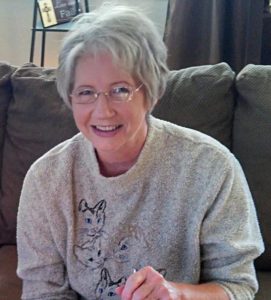
“She never had kids, but she has two nieces—both around my age—who want to meet me,” Kayla shared. “Mary was a dental hygienist her whole life. She passed away on my birthday, December 8. She also sang in a group called The Grateful Hearts—so obviously, her lungs were amazing! She lost her husband in her thirties and never remarried, but she had lifelong friends who also want to meet me.”
After several attempts to coordinate a visit with the family, the timing finally worked out and Kayla met Mary’s sister, Dottie, and three of Mary’s close church friends for lunch in Knoxville.
“I was nervous,” Kayla said. “Her sister cried when she hugged me in the beginning, and I teared up while thanking them. I told them I always wanted to thank my donor’s family in person for giving me this second chance at life.”
The group shared stories about Mary and about Kayla’s journey with cystic fibrosis and her transplant. When Dottie listened to Kayla’s lungs, both women cried.
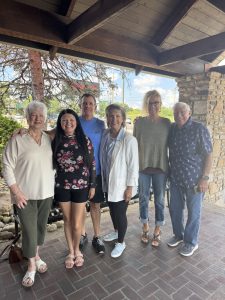
“They were the kindest people,” said Kayla. “They thanked me for taking such good care of my lungs—they said they could tell because I looked so healthy. They told me that when the surgeon recovered Mary’s organs, he said they were some of the healthiest he’d ever seen. She was 63 when she passed, so my lungs are technically 75 now! They hadn’t heard from any of the other recipients, so they were really excited to meet me.”
Although the visit was brief, it left a lasting impression.
“It wasn’t a terribly long visit, and maybe they didn’t really know what to say either,” Kayla reflected. “But it was meaningful. I told them about my life, what I do, and how grateful I am. They were just the sweetest group of people.”
As Kayla approaches the 12th anniversary of her transplant at the end of 2025, she remains deeply grateful for the gift she was given.
“Because of my donor, I was able to go back to work and not be on oxygen anymore,” said Kayla. “I’ve run multiple 5Ks, did the triathlon, and I’ve participated in five transplant games. I’m able to travel and not worry as much about being sick. Visiting all of the national parks is on my bucket list, and I’ve seen quite a few now. I’m able to take better care of myself, exercise, and I play pickleball almost every day. It’s just amazing.”
As someone who has experienced the life-changing power of organ donation, Kayla urges everyone to consider registering as an organ, eye, and tissue donor.
“Anyone can get sick at any point in their life and suddenly need a transplant,” she said. “When you no longer need your organs, giving them to someone who is literally dying to live is one of the most selfless things you can do.”
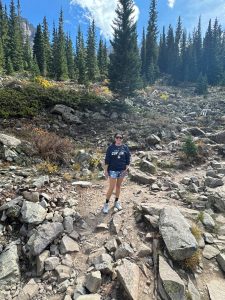
For those waiting for their own second chance, she offers this advice:
“Your most beautiful days may still be ahead of you,” she said. “I was sick all the time growing up, and in the years leading up to my transplant, I barely lived. But my transplant gave me a reason to truly enjoy life. Brighter days are coming.”
75 or more lives can be saved and healed by one organ, eye, and tissue donor. Sign up as a donor today!