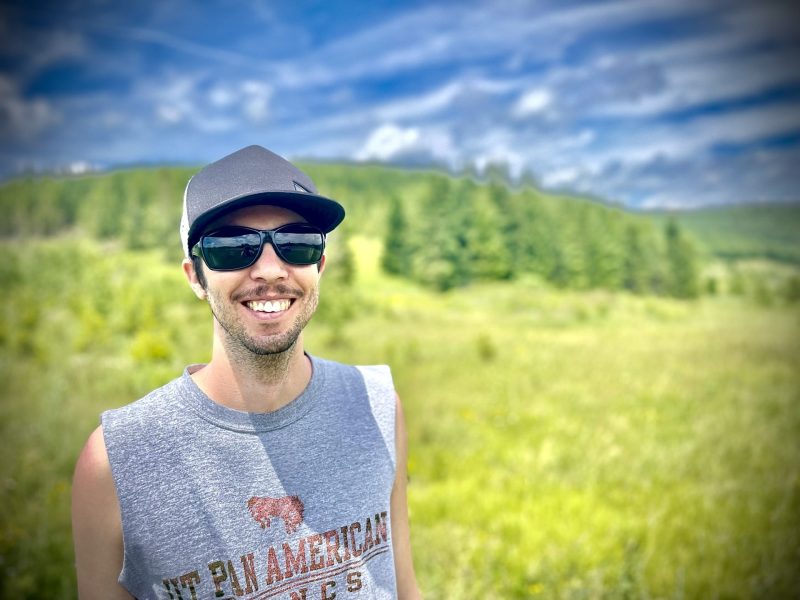
For many people, kidney failure can come out of nowhere, even at a young age. It doesn’t care about your hobbies, your long-term plans, or the life you’ve built. For Patrick, an avid outdoorsman who loved rock climbing and whitewater rafting, kidney failure was certainly not on his bingo card.
At just 25 years old, Patrick was diagnosed with focal segmental glomerulosclerosis (FSGS), a serious form of kidney disease in which some of the kidney’s tiny filtering units become damaged and collapse. It was a massive blow.
“It was a total shock and surprise to everybody,” said Patrick. “I didn’t even know where my kidneys were!”
In 2011, Patrick began dialysis and had to let go of the outdoorsy lifestyle that he had always cherished. His older sister immediately offered to give him a kidney, a decision he will never forget.
“When she offered, it felt really comforting,” said Patrick. “I was in shock about it, but obviously, it felt good. Unfortunately, we found out we weren’t a good match.”
As a result, his sister, Kate, started the process of becoming a non-direct donor in hopes to be part of a kidney chain. Unfortunately, this would take an unknown amount of time.
“I had been on dialysis for about 6 months; one of my best friends called me and said he had been tested, that he was a perfect match and wanted to be my donor,” recalled Patrick. “I started sobbing with gratitude and relief that it was potentially going to happen soon. But, despite being a perfect match, during all the testing we found out he could not donate. It was crushing for everyone.”
The physical and emotional ups and downs of dialysis were almost too much for Patrick to bear. After two and a half years, the FDA approved ABO-incompatible kidney transplant. This made it possible for Kate to directly donate to Patrick—and soon.
“When I found out I was getting the transplant, it was beyond words,” said Patrick. “I can’t express the relief that I felt from getting out of the most desperate situation I’ve ever been in.”
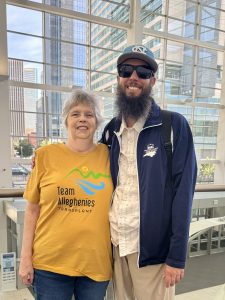
In 2013, Kate became Patrick’s living kidney donor, becoming just the third pair to have the procedure at UNC.
“I had the transplant surgery, and the next morning when I woke up, I could tell that I had better kidney function,” he said. “I felt better than I had in 2 ½ years.”
Despite the noticeable improvement in kidney function, Patrick’s recovery was anything but easy.
“I had a bunch of pre-existing injuries, and I started having really bad spasms, tremors, and chronic pain,” said Patrick. “People are supposed to get a kidney transplant at my age and start doing everything they used to do. Within about a year and a half, I started tearing basically every joint on the right side of my body. Eventually, my entire life shut down. I stopped working. I couldn’t drive. I had to move back in with my parents. I became a shut-in. That was two and a half, three years after my transplant, when I was supposed to be soaring.”
Despite the hurdles he faced over the years, Patrick never stopped working toward getting better. Progress was slow at first, but after finding a new physical therapist, he began making strides he never thought possible.
“That became my new happy place,” said Patrick. “When I would go to physical therapy, it was like going to my social event, going to my gym. I started experiencing progress I never thought I’d experience again. I started getting back little things. Like, ‘Oh, today I can sit in this chair and not have shooting pain.’ It was like, ‘Oh my God, this is amazing. I can go hang out with a friend for a few hours.’”
Patrick had first heard about the Transplant Games of America while he was on dialysis. At the time, he imagined getting a transplant, heading to the Games, and competing in every event. He attended a team meeting in 2017 but still didn’t feel strong enough to participate. In 2026, Patrick finally made it to his first Transplant Games in Denver, competing in the 5K.
“I couldn’t even sleep the night before the Games, I was so excited,” said Patrick. “I walked into the biggest room I’ve ever been in, and it was filled with all of these other people who had been through something similar to what I’ve been through. I was on such a high. All of those people were past the hard part, and there they were, living their best lives. It was really helpful to see the strength of those people. Patrick also met his first donor family at the Games, a moment he’ll never forget.
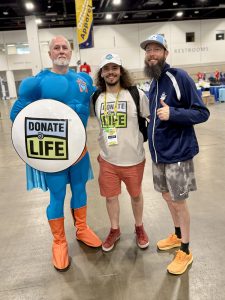
“I met this woman whose son was a donor,” said Patrick. “Her son was accidentally shot and killed on a hunting trip at 8 years old. In the midst of a devastating tragedy, his parents were able to see past their grief and donated all of his organs. That was probably one of the most impactful experiences of the trip.”
Today, Patrick is doing infinitely better than he was four years ago, but his journey is still ongoing. While he currently is unable to work, his unexpected health journey has led him to discover a new passion.
“I’m feeling much closer to a new life that I’ve never been able to envision before—one where I’m helping other people,” said Patrick. “It’s something I’m passionate about. I want to help everyone who needs an organ, however I can. And I want to help people get out of pain.”
“My teammates and the games have been a wonderful influence on me. It’s powerful to feel understood and share friendship and support with the transplant community.”
Like Patrick’s, everyone’s healing journey looks a little different. The Transplant Games offer a chance to connect with others who have walked a similar path and understand the unique experience of life after transplant. To learn more about the Transplant Games and the positive impact they have on recipients and donor families, click here!