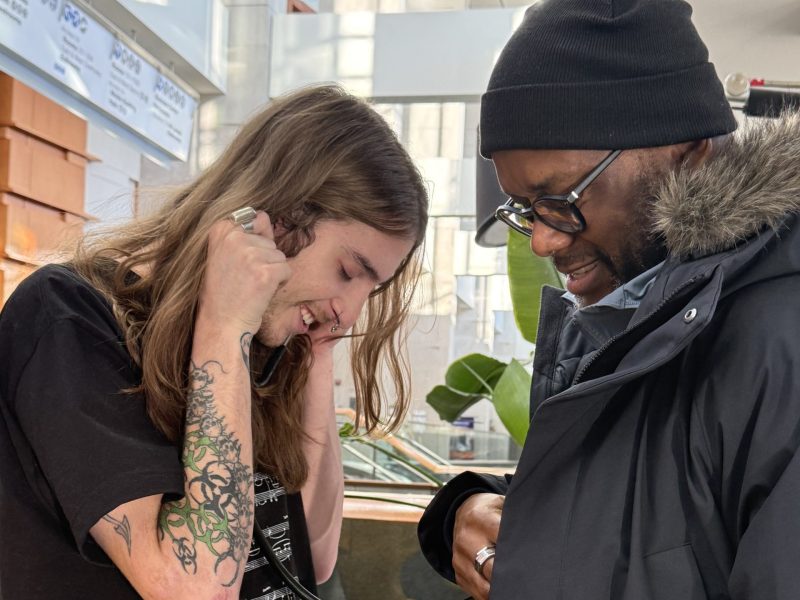
On February 13, 2026, 21-year-old Ian heard his father’s heartbeat again after losing him at just three years old. His mother, Alicia, watched through tears.
“Ian just kept saying, ‘Oh my God … this is all because of my dad. My dad’s heart is still walking on this Earth,” Alicia said. “He was beaming with pride, realizing the impact his father made. When you really think about it, it doesn’t feel real. It’s the same heart I used to hear when I laid my head on his chest—and now it’s beating in someone else’s chest, keeping him alive.”
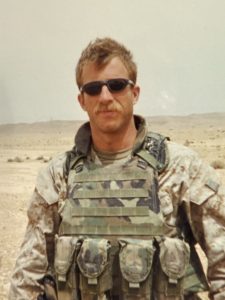
Alicia first met her husband, Michael “Mike” Delamere, in college. After graduating, he joined the Marine Corps and became a Force Recon Marine.
“He was always a thrill seeker, someone who enjoyed pushing things a little to the edge,” said Alicia. “He really loved riding motorcycles—he even built them, tinkered with them. Mike was one of those people who never met a stranger, was a great leader, and always found himself in positions of helping other people. Everyone was drawn to him because they respected him, but he was just an all-around fun, loving guy. He was a wonderful husband, a great father, and an even better friend and son.”
In spring 2007, while Mike was home from deployment, the couple attended Myrtle Beach Bike Week. A last-minute decision led Alicia to switch bikes with a friend, who rode with Mike. The group was briefly separated after a stoplight, and soon after, tragedy struck.
“Someone pulled out in front of them, and Mike T-boned a van going about 55 miles an hour,” Alicia said. “Both Mike and Laura, our friend who was on the back of his bike, were in critical condition. We knew Laura had been airlifted from the scene, and Mike was taken to a local hospital in Myrtle Beach.”
By the time Alicia made it to the local hospital, Mike had already been airlifted to Charleston. Once she arrived in Charleston, a doctor told her that Mike had less than a 10% chance of survival. Although he had no head injury, the impact of the crash caused him to aspirate, cutting off oxygen to his brain. He was declared brain dead.
“They noticed he was an organ donor by the iconic heart on his license,” said Alicia. “He was at the pinnacle of health as a Special Ops Marine, very physically fit. I said, ‘Please make something good happen out of this tragedy that we’re facing. If you can help save other people’s lives, Mike would absolutely want you to do that.’”
Despite her grief, Alicia asked that everything possible be donated.
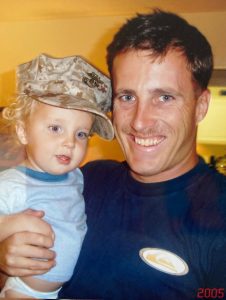
“I told them, I have a 3-year-old at home who’s going to ask where his dad is. If I can show him his father saved lives, it won’t feel like it was for nothing.”
In the end, everything was able to be donated except Mike’s lungs, which were too damaged from the aspiration. His organs, tissues, and corneas were all placed with recipients.
At the time Mike passed, Alicia was under the impression that donor families had very limited ability to reach out to recipients. In May 2025, on the 18th year of his passing, around her son’s 21st birthday, Alicia felt compelled to revisit something she had wondered about for years.
“It was always my dream for us to meet one of his recipients,” Alicia said. “Because Ian was so young, I imagined that one day he in particular would meet someone and hear, ‘thank you, your father made the greatest sacrifice and saved my life.’ But when no one ever reached out, I slowly let that dream go. I didn’t think we had the right to find them. Then, 18 years later, I decided to Google whether donor family rights had changed.”
Alicia’s research led her to We Are Sharing Hope SC, the organ procurement organization that serves the state of South Carolina. She submitted an inquiry, and soon after, Donor Family Services Aftercare Advocate Julie McIntosh reached out and began searching to see what information she could find about any of the recipients.
A couple of months later, Julie called with some news.
“She shared that his right kidney recipient lived nine years and passed away in 2016,” said Alicia. “His liver recipient lived 15 years, passing in 2022, and the pancreas recipient lived four years before passing in 2011. She was still searching for his heart recipient and said she wasn’t giving up. Then, just a day later, she called back and said her ‘last-ditch email’ had worked—she had found his heart recipient, and he was still alive.”
The news was overwhelming. Nearly two decades later, Mike’s heart was still beating strong. Julie reached out to the recipient’s patient coordinator to see if the recipient would be open to any form of communication.
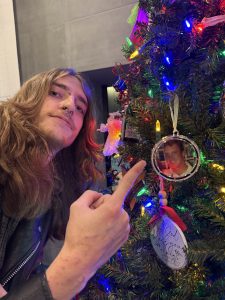
Eventually, Alicia received an email saying that the recipient was willing to correspond, so after a few emails between both Alicia and Wally facilitated by both patient coordinators, they were able to line up a phone call to finally “meet”.
“His name is Wally, he’s a father of three, and he lives in Maryland,” said Alicia. “He’s in the medical field and has in turn helped save lives with his own job. When you really stop and think about it, donation itself saves one person—but when that person is in a lifesaving field, the ripple effect is just infinite.”
Wally told Alicia that when he woke up from his transplant, he immediately thought of the family who had given him a second chance at life. He had always wondered if his donor had a firstborn son—in his Nigerian culture, the firstborn son is responsible for taking care of the family.
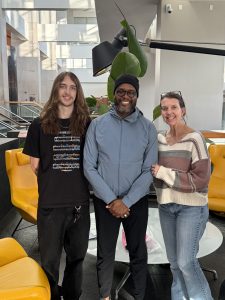
“Wally said, ‘I’ve often wondered if someone was teaching him how to be a man,’” said Alicia. “Then he told Ian, ‘I would like to be that person in your life, if you would allow me to do that, I owe it to your father.’ Ian and I were both in tears. It really showed me what kind of man received his heart. And I told him, “If Mike and I could have written a description of the ideal person to receive his heart, it would have been you, Wally!”
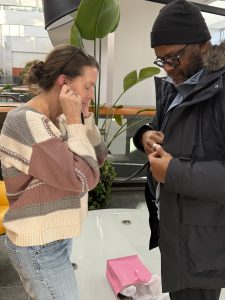
On Feb. 13, both Alicia and Ian met Wally in person and were able to hear that familiar heart beat.
“It was truly a very special moment in time that I will never forget,” said Alicia. “Wally is the kindest, most gentle human being I’ve ever met and truly gracious. He continued to tell Ian, ‘In whatever capacity you will allow me to be in your life, I welcome that.’”
Alicia encourages other donor families to explore learning more about their recipients when they feel ready, and for recipients to be open to meeting families whose legacy lives on through them. We can’t change the chapters of our life stories, she says, but we can embrace the good that comes out of them. It is a choice that is often difficult but comes with heartwarming rewards you didn’t know were possible.
“Allow yourself grace to be happy for someone whose life your loved one changed,” said Alicia. “Even if you never meet them, it’s wonderful knowing your loved one’s decision to be an organ donor changed lives. No matter how long their lives are extended, the simple act of agreeing to be a donor can offer recipients more time with their family and loved ones. In the end, there’s no way you could have changed what happened to your loved one, but you can change someone else’s life. Knowing a part of them lives on will warm your soul in ways you never imagined.”
75 or more lives can be saved and healed by one organ, eye, and tissue donor. Sign up today!