For Deanna Leftdwrige, a tissue recovery specialist at HonorBridge, organ and tissue donation isn’t just a job; it’s a part of her family’s story.
“My grandfather, Scottie Lee Leftdwrige, was the first recipient to receive a kidney transplant from Howard University back in 1974,” said Deanna. “His surgery was performed by Dr. Clive Callender, one of the nation’s first Black transplant surgeons. Granddaddy passed away in 1987, and even though I did not get to meet him, it still gave him 11 years of life to be with my father and his siblings. We’re all very grateful.”
While Deanna always knew about her grandfather’s legacy, she felt called to learn more in recent years.
“In 2021, I traveled to Washington, D.C., to see where my grandfather stayed,” she said. “I did my own research and reached out to Howard University. In 2022, I had the honor of speaking with Dr. Callender. He was still practicing at the time, and he told me he remembered my grandfather—that they had become good friends and stayed in touch over the years. He even attended my grandfather’s funeral.”
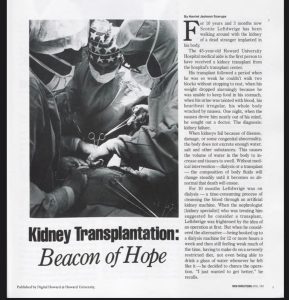
According to an article written in 1984, Scottie’s surgery “followed a period where he was so weak he couldn’t walk two blocks without stopping to rest, when his weight dropped alarmingly because he was unable to keep food in his stomach, when his urine was tainted with blood, his heartbeat irregular, his whole body wracked by nausea.”
After his transplant, Scottie was able to come off dialysis, return to work at the university, and spend meaningful time with his family. The surgery didn’t just extend his life, it gave him the chance to truly live again.
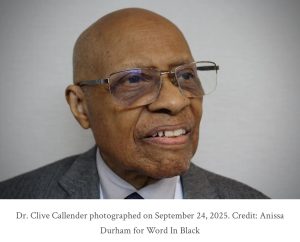
Remarkably, Deanna’s grandfather was the very first transplant patient operated on by Dr. Callender. After completing his surgical training at the University of Minnesota in 1973, Dr. Callender went on to become the third African American transplant surgeon in the world. Over the course of his career, he has performed more than 600 transplant surgeries, trained hundreds of physicians, and founded the National Minority Organ Tissue Transplant Education Program (MOTTEP).
“I don’t think my grandfather needed anyone to persuade him to do the surgery,” said Deanna. “He figured he’d give it a shot, and he always said he didn’t mind being ‘a guinea pig.’ I don’t think anyone at that time really knew too much about organ donation, but he took the risk and he made history.”
Like Scottie, Deanna was born and raised in Goldsboro, North Carolina. Before joining HonorBridge, she worked in funeral services and also served as an EMT and public notary. Today, in her role as a tissue recovery specialist, she describes her work as a true “full circle moment.”
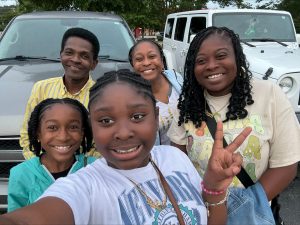
“Part of the impact my grandfather made was me seeking out this career,” said Deanna. “To me, being a part of this process means much more than words can really express. It’s exciting to know that we’re giving people a second chance with heart valves, veins, skin grafts, and more. Transitioning from funeral services to organ and tissue recovery is different in many ways, but at the heart of it, the purpose is similar. I’m still helping families find peace of mind, knowing their loved ones are cared for. But with donation, I’m helping two families—the donor families and the recipients. It really feels like returning to my roots. I think my granddad would be very happy; I still feel like he’s a part of me going into work.”
Thanks to an article published before she was born, Deanna has a clear understanding of what the gift of life meant to her grandfather.
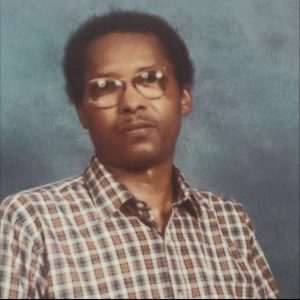
“I’m thankful for being able to work, for being able to do things I couldn’t do on the [dialysis] machine,” Scottie said in 1984. “I’m thankful my appetite’s much better and that I don’t have as much sickness. I’m thankful I’m able to live a normal life.”
75 or more lives can be saved and healed by one organ, eye, and tissue donor. Sign up today!